


The University of Manchester leads innovation with Siemens SIMATIC PCS neo technology
January 2026: Siemens SIMATIC PCS neo-operated experimental semi-batch reactor
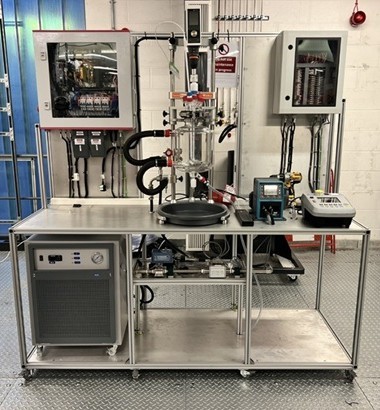
Over the past year, James Chadwick Building Pilot Hall team successfully designed, built, and commissioned a new experimental semi-batch reactor, operated using Siemens SIMATIC PCS neo. This project represents a concerted team effort, and the rig is a strong technical and educational achievement. It signifies a milestone for the Industrial Hub/James Chadwick Building Pilot Hall, as it establishes the second operational PCS neo rig at the University, further strengthening our digital process control capability.
The rig will be used for teaching and research purposes. It will enhance students' knowledge and skills of advanced process controls by exposing them to the state-of-the-art process control technology and will allow researchers to apply process digital twin features in modelling and simulation of the process.
November 2025: Department of Chemical Engineering hosts Siemens hands-on training
A group of nine Siemens graduate scheme engineers, E3 sponsored students and degree apprentices took part in hands-on Siemens process control and simulation training in James Chadwick Building / Industrial Hub for Sustainable Engineering.
Attendees explored the existing PCS7 distributed control system across pilot scale rigs, learnt how to build SIMIT simulations and the impressive progress in rolling out PCSneo. This is not a one-off event of its kind - our first Siemens hands-on training event was in 2014 and the content has evolved and grown as our relationship and technology have advanced.
This year, we were joined on site by Siemens leading experts in gProms and Industrial Automation who led a new hands-on workshop on optimising operation of a real case study - waste water plant - using a PCSneo-SIMIT-gPROMS digital twin. We all learned a lot and it has inspired us to try new things with our systems that we can bring into our teaching and research.
Feedback has been very positive:
“It was great to get some hands on experience with some science and the PCS systems that make them work.
The lab technicians/helpers were very knowledgeable and lovely - a credit to your department!"
The University of Manchester showcases cutting-edge process control technology at Siemens’ Transform 2024
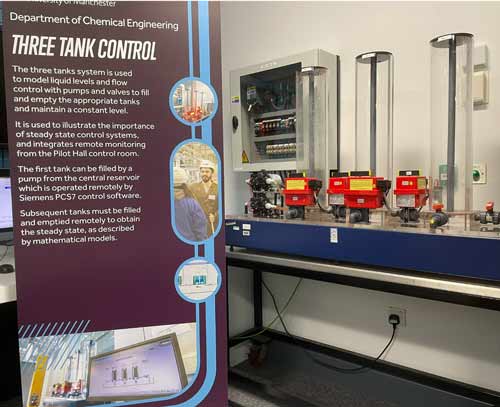
In July 2024, over 4,000 industry leaders, technology experts, and policymakers gathered at Manchester Central for Siemens' Transform 2024, an event dedicated to exploring the future of digital and sustainable transformation. Representing the Department’s long-standing collaboration with Siemens, Peter Koukoulas showcased the latest advancements in process control systems, including the Siemens SIMATIC PCS neo v5.0 DCS and Siemens SIMIT v11 platforms.
The University of Manchester is proud to be the only UK institution equipped with a SIMATIC PCS neo distributed control system. Peter's live demonstration featured remote operation and control of a three-tank system, streamed via video link from the exhibition hall to the rig at the James Chadwick Building. This display marked the successful completion of a two-year investment and development programme aimed at upgrading the Chadwick Pilot Hall DCS with PCS neo technology.
Through this initiative, we are future-proofing our facilities and ensuring that our students gain hands-on experience with the most advanced industrial control systems available today.